I really can’t understate how great the staff are, the nurses, doctors, chefs, cleaning staff and the Volunteer Liaison Officer, make the experience worthwhile.

Quotient Sciences, Nottingham

I really can’t understate how great the staff are, the nurses, doctors, chefs, cleaning staff and the Volunteer Liaison Officer, make the experience worthwhile.
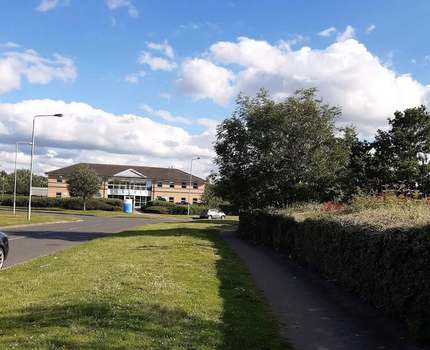
volunteer Stuart

It’s a great experience at Quotient Sciences!

Hi, my name is Stuart and I’ve done 2 trials at Quotient over the last year.
I found out about Quotient Sciences clinical trials whilst on a bus journey in my local town, I was curious what it was all about and with the cost-of-living increase, I decided to investigate it.

Now, I know what you’re thinking, like many of my friends and family, their initial reaction was one of scepticism and concern i.e. is it safe? Like anything in life there is an element of risk, and I can’t say 100% that you won’t have any side effects, all I can say is from my own experience and that of others I have spoken to they are minimal. These medicines are obliged to go through a robust testing process before they can come to market. They can’t just be tested on the unhealthy/the people they are intended for with weak immune systems or underlying health conditions etc just in case there are side effects. It’s a long process with many different stages of testing. Of the 2 trials I have done, the first being 4 nights to see what it was about and the second of 20 nights once I knew what to expect the only side effects I have had are, a headache and a bit of stiffness in my neck/back that went away almost immediately once I was back home. Whether or not that was the test medicine or the conditions of being in a different bed surrounded by other people and watching too much TV/gaming a lot more than I usually would is hard to say.

Personally, I think lying in bed/lounging around on my laptop and phone were the main reasons. As for other people, many of whom have done lots of trials over several years, again very few side effects, the odd headache, or again achy muscle/joints from lounging around too much.

The screening process is very thorough, and everything is explained to you beforehand, so you understand what any risks might be. You can withdraw at any point, and it won’t be held against you.

So, if you’re still with me you’ll want to know what it’s like on the trial itself. What do I do? What’s expected of me? Well, I guess that can depend on the the clinical trial you participate in.

On my first trial it was a bit of a whirlwind. I checked in and they did the usual tests to see if I was fit and healthy. It is explained to you beforehand but be aware there will always be more people than they need on the trial. Usually, 2-3 reserves. For example, if they need 7 there may be 10 and the 7 will be selected on their test results. Both times I have been fine and stayed on the trial and both times there have been others who were made reserves as they were out of range. It’s not all bad news if you’re a reserve, you get paid a reserve fee and can sign up for another trial.

My first trial was hectic. At one point I think I counted 20 people (staff) in the room as there was so much going on. Each volunteer is on timed procedures. For example, on mine there were 7 people, I was in bed 5 so the first would start at 7a.m then 7:05, 7:10, 7:15 and so on. It’s very useful later in the trial if you’re later down the line because you know that when the person in bed 1 must do something like go for lunch or starts their procedures you are reminded, you’re up soon. It’s a well-oiled, efficient, and practiced process of doctors and nurses.

In hindsight, I had chosen a busy trial, and it makes sense that a short trial would be very busy, and they must fit so much into a shorter period. The trial was easy, it was mostly the one busy day then two with set procedures but not as many. Every trial is different of course so make sure you read the information that is sent to you as it tells you everything you need to know. On the first trial I was on one of the smaller wards, there were ten of us and there is only 1 shower/toilet in the room however there are two other toilets outside the room to use and if it’s quiet/no other cohorts are on the other wards you can use the showers in them.

I like to shower twice a day, morning, and night so between 7 people I didn’t think it would work but you would be surprised, people have different patterns and habits.

I wake earlier than most and go to bed earlier, some sleep in, so 90% of the time it was available - when it wasn’t it was just a short wait. That takes me onto the other people on the trial. We are all there for the same reason, ultimately, it’s for the inconvenience allowance to help our hobbies, friends and our families.

Overall, it was a great experience, the main positive are the staff. They are amazing, good at their jobs. They are efficient, knowledgeable, and friendly.

If you need anything they will do their best and go out the way to accommodate you. The food is good, it’s a set menu but there is a lot of choice and it’s freshly prepared every day.

So, after my 4-night stay having had a good experience, I decided to return for a long one of 20 days.

I preferred the longer stay. You get into a nice routine and because it’s more stretched out there seem to be less procedures and less “busy days”. Obviously again every trial is different but from speaking to the ‘regular’ volunteers the longer ones are better and more relaxed.

Being in for longer also means you can form friendships with other people, and you find out interesting things about others and even if you don’t have things in common with everyone, if you stay open minded, you’ll still learn things about the world and yourself. On my trial there were several regulars who had been coming for years and they used the trials to go on holidays, enjoy their hobbies and support their families. For me our cohort was great. Two kept themselves to themselves but were respectful and polite. Amongst the others we formed friendships and camaraderie, sharing stories, jokes, watching films, playing games together.

There is a pool table on each section, and we had regular games against one another, and the volunteer support liaison organised a quiz, a pool tournament and even bingo! I know bingo, right? I’m a 39-year-old man who’s never played bingo before, but it was surprisingly fun! I will play again; the best thing is someone always wins, and it passes the time. Again, the staff were amazing, 20 days inside is a long time especially if you’re away from your kids /family like me. They do their best to make you comfortable and help the time pass. We went on 3 walks around the local park and being inside makes you appreciate the natural beauty and freedom even more. I am a very active person, I run, cycle, or walk over 30miles a week on average so not being able to exercise was tricky for me at first but again the staff keep you busy and the time flies!

To summarise it’s a great experience where you get to meet new people and you get paid for it.

I really can’t understate how great the staff are, the nurses, doctors, chefs, cleaning staff and the Volunteer Liaison Officer, make the experience worthwhile.
Thank you to our volunteers who continue to make a huge contribution to medicine

Thank you to our volunteers who continue to make a huge contribution to medicine

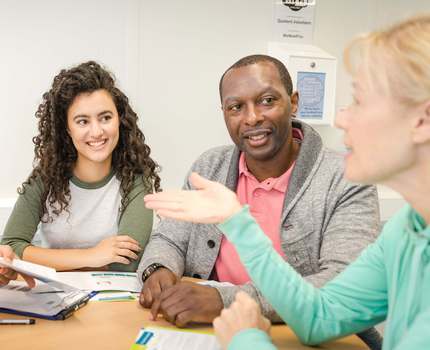
Group of volunteers sitting, talking together

Volunteers who took part in a study back in 2011 that investigated a treatment for acute skin infections have contributed to a new medication called Baxdela making it to the US market.

Baxdela offers a new option for the treatment of adult patients with severe bacterial skin and skin structure infections.

Yet again, thank you to our volunteers who continue to make a huge contribution to medicine by taking part in clinical trials with us.

Receive up to £200 just by recommending your friends to us

Receive up to £200 just by recommending your friends to us

Volunteering is a rewarding experience and to us our volunteers are heroes!

As a healthy volunteer, not only are you helping to make a difference to the world of medicine, but it’s a great feeling knowing that you’re helping to improve the quality of life for others. There are lots of benefits to taking part in a trial at Quotient Sciences – including a comprehensive health check as part of your enrollment on the trial and getting paid for your time. You’ll get to relax amongst a group of like-minded people and be able to enjoy being looked after in our state-of-the-art facilities with films, television and games to choose from, as well as having all of your meals prepared for you.

If you’re already one of our volunteer heroes, you could receive up to £300 just by recommending your friends or relatives to us.

If you know anyone who might be interested in taking part in our clinical trials, simply complete our short online recommend a friend form.

When your friend has successfully completed an induction with us you will receive £50 (£100 is paid upon completion of your referral's induction for post-menopausal or sterilised females and vasectomised males) AND when your friend completes their first study you’ll be able to claim an additional £150 (£200 is paid upon completion of your referral’s first trial for post-menopausal or sterilised females and vasectomised males).

It’s as simple as that! There’s no limit to the number of friends you can recommend, so start now and you could soon be taking part on studies with your mates!

Note: Volunteers must be aged 18 or over. 

International Day of Happiness

International Day of Happiness

Graphic reading, "International Day of Happiness"

The weather appears to be getting ready for spring and we’ve seen some lovely sunshine over the past few days. If you’re planning your weekend, make sure you make happy plans as Sunday is International Day of Happiness

Sometimes we need to take the time to sit back and see how we can make our lives and others around us happier. There are some great tips on how to live a happier life http://www.actionforhappiness.org/. And remember – happiness is contagious!

Things like exercise can make a massive difference to our quality of life and also make us happier. So why not take a walk in the sunshine; maybe your happy state will rub off on the people around you. You can always share what you choose to do on Sunday to make life happier on Twitter with #InternationalDayOfHappiness

My Tough Mudder experience

My Tough Mudder experience

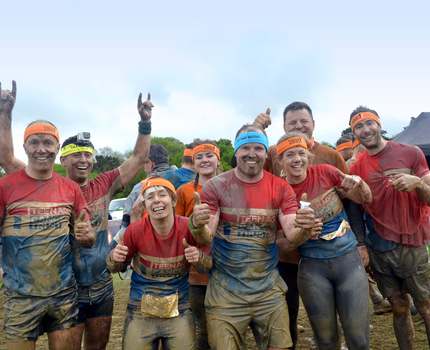
A group of mud run participants standing together after the race

Some of our bravest colleagues took part in the Tough Mudder challenge on Saturday, 21st May to raise donations for Teenage Cancer Trust. Sarah Rae, our Service Area Associate, shares her experience including how she managed to complete the course and overcome various obstacles, together with the rest of the team:

This was my first event of this type, and having never ran further than 5K I was somewhat nervous on the build up to Saturday’s 11.1 mile obstacle course, especially knowing I would be muddy, wet and wearing a tutu. Whilst waiting on the start line the message given to us was that this was not a race but a challenge, and that it was! Once we crossed the start line we had little time to let the nerves get to us as less than a mile in we were being plunged into a muddy pool of water,  from then on you knew that there was no avoiding the water or mud, so as a team we just embraced it.

The course had over 20 obstacles but by far the most memorable was the Arctic enema. We were faced with a slide which plunged into a pool filled with ice cold water. If the plunge into the ice wasn’t enough we then needed to swim underneath a row of tyres before climbing out of the pool. We all made it out in a somewhat shocked and disheveled state but got straight back to it and began the run to the next obstacle.

At some point through the day I think we all had a moment where we didn’t want to face what was next, the obstacles were physically demanding but as the day went on the rain also started. The obstacles became more spread out, the runs were longer and the cold was beginning to set in. It was at this point that we faced mud mile. Around 8 or 9 miles into the course, we were required to run through thick mud. So thick that if you stood still too long you were likely to leave a shoe behind when you tried to move.  We then faced 4 mounds of mud separated by pools of muddy water. You were expected to climb up and slide down the mud hills into the muddy water. The rain was falling and hundreds of mudders had gone before us making some of the hills difficult to get over. At this point in the day we were all tired, we all slipped and fell at some point, but it didn’t break us. We laughed off the falls, pulled each other over the mud, and out of the water and kept going. After a mile run we then got to climb back over mud mile and this time it was a little more of a struggle.

By the time we crossed the finished line it had been 4 hours since we started. All the way round the course all participants were helping each other, it certainly wasn’t a race. You cheered those on around you and helped motivate each other when it looked like someone was starting to break. Throughout the day we all faced some fears or had injuries to deal with but we kept going and made it through as a team. We stuck together the whole way round the course, and I couldn’t and wouldn’t have wanted to do it without my teammates. It was true to its name and was tough, but we had some great laughs, and it was a great experience. I can’t wait to face the challenge next year!

Sarah Rae, Service Area Associate at Quotient Sciences

What are the stages of drug development process?

What are the stages of drug development process?

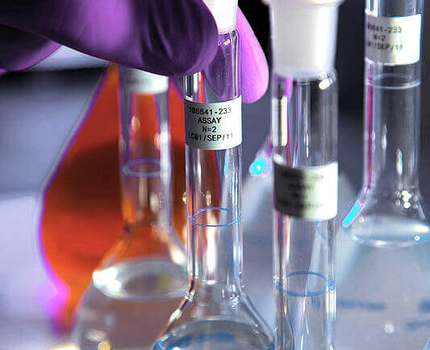
bottles in a laboratory

The process of bringing a medicine to the market takes up to 12 years, from initial discovery in the laboratory, through the phases of clinical testing to being licensed and available on the market.

Once a molecule is discovered, it undergoes extensive laboratory testing and experiments with animals in order to show its potential properties, safety and its value as a new therapy. The results from the pre-clinical phase are then submitted to regulatory authorities for approval to be tested on people in clinical trials.

The clinical trials stage consists of three main phases and all new medicines have to go through these parts before they can be prescribed to patients. The clinical phase is there to establish the dose and best form of the drug, its safety, how it is absorbed by the body and furthermore whether the treatment works. The main phases of clinical research are:

  • Phase 1 trials are often the first time a drug is administered to humans and usually involve a small number of volunteers. These often focus on healthy individuals, who are given compensation for their participation. Phase 1 is mainly about understanding whether the drug is safe to use in humans, rather than how effective it may be at treating a specific disease. This is when the optimal dose is established and side effects are assessed.
     
  • Phase 2 trials involve patients and the number of participants is higher than in the previous stage. This stage aims to assess how well the drug works at treating a particular disease and the more about the best method for delivery e.g. tablets, sprays, injections etc. Many treatments do not make it to Phase 2.
     
  • Phase 3 trials require much larger groups of patients, from hundreds to thousands; and they aim to compare the effects of the new drug to either a placebo or a standard treatment.

Once these stages of clinical research prove the effectiveness of the investigated drug, the treatment can be approved and registered with the country’s regulatory authority as a new therapy for patients. The final, post-marketing stage of drug development involves research on long-term benefits, side effect and drug’s optimal use.

As an early drug development company, Quotient Sciences performs Phase 1 clinical trials as well as supporting patient studies by supplying drug product to specialist clinics.

To find out more about our services apart from clinical testing, read our “Learn what we do” blog post. 

Learn more about what we do

Learn more about what we do

two scientists working in a lab

Quotient Sciences is a well-established drug development company focused on delivering truly innovative solutions to help our customers improve their research and development productivity.

For more than 25 years, Quotient Sciences has brought innovation to early drug development programs for pharmaceutical companies worldwide. At the company’s purpose built facilities, “real-time” drug manufacturing of all types of dosage forms is co-located with our clinical pharmacology unit to maximise flexibility, speed and cost savings for clients. This approach is known as our Translational Pharmaceutics platform, that integrates formulation development and drug manufacturing with clinical testing.

We are committed to science-driven early drug development and with more than 320 highly trained specialists we provide a full range of services from study set-up right through to data analysis and reporting. Our clinical unit facility is located alongside our analytical facilitates in Ruddington, Nottingham, with 85 beds in six wards, recreational facilitates and labs where we process the samples.

Our team of medical and scientific experts includes medics, research physicians, research fellow, nurses, clinical technicians and other highly skilled colleagues who all share the same vision: to transform drug development with science and innovation.

If you want to find out more about our expertise and services that Quotient Sciences offers, visit our commercial website here.

We have donated medical supplies to Inter Care Medical Aid for Africa

We have donated medical supplies to Inter Care Medical Aid for Africa

Automatic External Defibrillator (AEDs)

It gives us a great joy to let you know that we have donated 5 Automatic External Defibrillators (AEDs) to Inter Care Medical Aid for Africa. This local charity works with 130 health units in rural Africa by providing them with vital medical supplies. Our donation will be split between Sierra Leone, Ghana, Tanzania, Malawi and Zambia.

The majority of health units in these rural areas are trying to treat patients with very basic equipment therefore our defibrillators will make a huge impact to patient care. Inter Care have already expressed their thanks and gratitude for our generous donation.

Subscribe to