My Tough Mudder experience

My Tough Mudder experience

A group of mud run participants standing together after the race

Some of our bravest colleagues took part in the Tough Mudder challenge on Saturday, 21st May to raise donations for Teenage Cancer Trust. Sarah Rae, our Service Area Associate, shares her experience including how she managed to complete the course and overcome various obstacles, together with the rest of the team:

This was my first event of this type, and having never ran further than 5K I was somewhat nervous on the build up to Saturday’s 11.1 mile obstacle course, especially knowing I would be muddy, wet and wearing a tutu. Whilst waiting on the start line the message given to us was that this was not a race but a challenge, and that it was! Once we crossed the start line we had little time to let the nerves get to us as less than a mile in we were being plunged into a muddy pool of water,  from then on you knew that there was no avoiding the water or mud, so as a team we just embraced it.

The course had over 20 obstacles but by far the most memorable was the Arctic enema. We were faced with a slide which plunged into a pool filled with ice cold water. If the plunge into the ice wasn’t enough we then needed to swim underneath a row of tyres before climbing out of the pool. We all made it out in a somewhat shocked and disheveled state but got straight back to it and began the run to the next obstacle.

At some point through the day I think we all had a moment where we didn’t want to face what was next, the obstacles were physically demanding but as the day went on the rain also started. The obstacles became more spread out, the runs were longer and the cold was beginning to set in. It was at this point that we faced mud mile. Around 8 or 9 miles into the course, we were required to run through thick mud. So thick that if you stood still too long you were likely to leave a shoe behind when you tried to move.  We then faced 4 mounds of mud separated by pools of muddy water. You were expected to climb up and slide down the mud hills into the muddy water. The rain was falling and hundreds of mudders had gone before us making some of the hills difficult to get over. At this point in the day we were all tired, we all slipped and fell at some point, but it didn’t break us. We laughed off the falls, pulled each other over the mud, and out of the water and kept going. After a mile run we then got to climb back over mud mile and this time it was a little more of a struggle.

By the time we crossed the finished line it had been 4 hours since we started. All the way round the course all participants were helping each other, it certainly wasn’t a race. You cheered those on around you and helped motivate each other when it looked like someone was starting to break. Throughout the day we all faced some fears or had injuries to deal with but we kept going and made it through as a team. We stuck together the whole way round the course, and I couldn’t and wouldn’t have wanted to do it without my teammates. It was true to its name and was tough, but we had some great laughs, and it was a great experience. I can’t wait to face the challenge next year!

Sarah Rae, Service Area Associate at Quotient Sciences

What are the stages of drug development process?

What are the stages of drug development process?

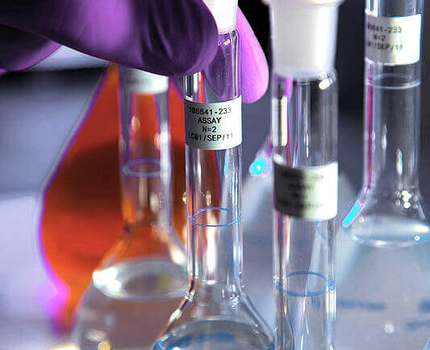
bottles in a laboratory

The process of bringing a medicine to the market takes up to 12 years, from initial discovery in the laboratory, through the phases of clinical testing to being licensed and available on the market.

Once a molecule is discovered, it undergoes extensive laboratory testing and experiments with animals in order to show its potential properties, safety and its value as a new therapy. The results from the pre-clinical phase are then submitted to regulatory authorities for approval to be tested on people in clinical trials.

The clinical trials stage consists of three main phases and all new medicines have to go through these parts before they can be prescribed to patients. The clinical phase is there to establish the dose and best form of the drug, its safety, how it is absorbed by the body and furthermore whether the treatment works. The main phases of clinical research are:

  • Phase 1 trials are often the first time a drug is administered to humans and usually involve a small number of volunteers. These often focus on healthy individuals, who are given compensation for their participation. Phase 1 is mainly about understanding whether the drug is safe to use in humans, rather than how effective it may be at treating a specific disease. This is when the optimal dose is established and side effects are assessed.
     
  • Phase 2 trials involve patients and the number of participants is higher than in the previous stage. This stage aims to assess how well the drug works at treating a particular disease and the more about the best method for delivery e.g. tablets, sprays, injections etc. Many treatments do not make it to Phase 2.
     
  • Phase 3 trials require much larger groups of patients, from hundreds to thousands; and they aim to compare the effects of the new drug to either a placebo or a standard treatment.

Once these stages of clinical research prove the effectiveness of the investigated drug, the treatment can be approved and registered with the country’s regulatory authority as a new therapy for patients. The final, post-marketing stage of drug development involves research on long-term benefits, side effect and drug’s optimal use.

As an early drug development company, Quotient Sciences performs Phase 1 clinical trials as well as supporting patient studies by supplying drug product to specialist clinics.

To find out more about our services apart from clinical testing, read our “Learn what we do” blog post. 
Learn more about what we do

Learn more about what we do

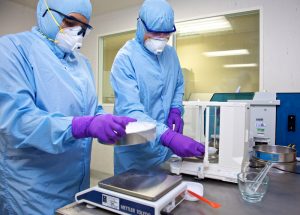
two scientists working in a lab

Quotient Sciences is a well-established drug development company focused on delivering truly innovative solutions to help our customers improve their research and development productivity.

For more than 25 years, Quotient Sciences has brought innovation to early drug development programs for pharmaceutical companies worldwide. At the company’s purpose built facilities, “real-time” drug manufacturing of all types of dosage forms is co-located with our clinical pharmacology unit to maximise flexibility, speed and cost savings for clients. This approach is known as our Translational Pharmaceutics platform, that integrates formulation development and drug manufacturing with clinical testing.

We are committed to science-driven early drug development and with more than 320 highly trained specialists we provide a full range of services from study set-up right through to data analysis and reporting. Our clinical unit facility is located alongside our analytical facilitates in Ruddington, Nottingham, with 85 beds in six wards, recreational facilitates and labs where we process the samples.

Our team of medical and scientific experts includes medics, research physicians, research fellow, nurses, clinical technicians and other highly skilled colleagues who all share the same vision: to transform drug development with science and innovation.

If you want to find out more about our expertise and services that Quotient Sciences offers, visit our commercial website here.

We have donated medical supplies to Inter Care Medical Aid for Africa

We have donated medical supplies to Inter Care Medical Aid for Africa

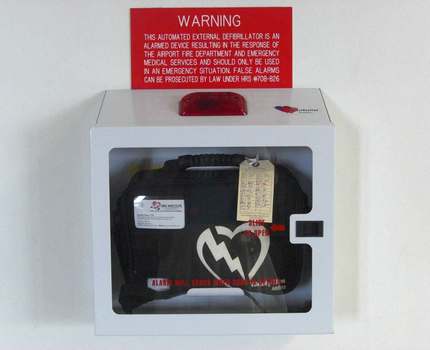
Automatic External Defibrillator (AEDs)

It gives us a great joy to let you know that we have donated 5 Automatic External Defibrillators (AEDs) to Inter Care Medical Aid for Africa. This local charity works with 130 health units in rural Africa by providing them with vital medical supplies. Our donation will be split between Sierra Leone, Ghana, Tanzania, Malawi and Zambia.

The majority of health units in these rural areas are trying to treat patients with very basic equipment therefore our defibrillators will make a huge impact to patient care. Inter Care have already expressed their thanks and gratitude for our generous donation.

New treatments on the market thanks to the help of our volunteers!

New treatments on the market thanks to the help of our volunteers!

two pills

We are often asked by volunteers: ‘’What happens to the drugs that I helped to trial during my time at Quotient Sciences?”

As all treatments go through many phases of development, we can’t always give an answer for several years as to whether a drug has become successful and is now helping patients.

However, we do have some exciting news – two clinical trials that we carried out at Quotient Sciences have played a key part in the introduction of new treatments.

If you were involved in the studies which took place during 2013 for a once-a-day treatment for Hepatitis or once-a-day weight management treatment for obese patients, then you played a big part in bringing them to market.

They both have been given the green light for use and are now available for patients, so a big thank you to you all. It goes to show you really do make a difference by helping to develop the medicines of the future.

You have played a major part in improving Huntington’s disease patients’ quality of life

You have played a major part in improving Huntington’s disease patients’ quality of life

Man sitting, reading a newspaper

Volunteers who participated in QCL113049, a human ADME study which we conducted back in 2012-2013, might be pleased to know that the molecule has just been approved as a treatment for Chorea associated with Huntington’s disease.

Chorea is the most visible feature of Huntington’s disease and it is characterised by abnormal, irregular, ‘dance-like’ movements. It is noted that nine out of ten people with Huntington’s disease will develop chorea at some point as their illness progresses.

As a volunteer in this study, you have played a major part in improving Huntington’s disease patients’ quality of life.

Thank you for your continuous support.

I really enjoyed the time out of the pressures of the ‘real world’.

Volunteer, UK

I really enjoyed the time out of the pressures of the ‘real world’.

Volunteer blog

Williams, one of my four Cats!

My name is Tim and I’m 26.
I live about an hour away from Quotient in Rugby with my partner and four cats and after seeing an advert online at www.weneedyou.co.uk,I clicked the link & my exciting journey began!

I started off by doing a short residential study, but more recently I have had the time for longer studies & have really enjoyed the time out of the pressures of the ‘real world’. The studies I’ve been on have been to help conditions including addiction, asthma and malignant hypothermia.

I tend to do a trial at least twice a year which fits in well with my life. I like to take part in studies for the inconvenience allowance which helped my partner and I to buy our first home in January 2021 and I now use the funds for home improvements - which is never ending!!!

The fact that the studies go on to help others is great too – a real win-win situation.

I’ve done about 6 or 7 studies now and have had a good experience on all of them – meeting great people each time. The other volunteers are friendly, and we regularly talk on group chats.

The food is nice and there is a wide range of choice. Whilst at the clinic you have some very busy days but some very quiet days, it helps to come well prepared with a few good boxsets and movies to watch. If you want to find out more, please follow the link and see how you can change lives forever!

I’ve made some amazing friends, it’s very much a volunteering community at Quotient Sciences.

Volunteer, UK

I’ve made some amazing friends, it’s very much a volunteering community at Quotient Sciences.

Man looking into camera, selfie

I’ve made so many amazing friends at Quotient Sciences!

When I thought about sharing my journey at Quotient Sciences in a blog, I was a little hesitant - would people relate, could people understand why I voluntarily enter an actual clinic with a clean bill of health? But as I currently reside on my bed in clinic, in Quotient Sciences' ultra-professional unit, while in my third year of doing studies at Quotient Sciences, I thought let’s give this a go!

I’ve been bitten by the travel bug and want to visit many places and see different cultures. I like my sports and music, especially Leeds United - but don’t hold that against me. I spent 2 years travelling in Australia where I first encountered clinical trials – so when I returned to England, I got online and found Quotient Sciences.

I have been a volunteer at Quotient Sciences for 2 years now and highly recommend it. I had previously taken part in clinical trials whilst living in Australia and then some inductions and screening in the U.K - but once I visited the clinic in Nottingham, I haven’t wanted to go anywhere else.

‘Why do you take part in them?’ most of my non volunteering mates ask. The main reason is the money of course and it helps me pursue my dreams in a way that I wouldn’t otherwise be able to working full-time.

Importantly, it’s also great that I can help contribute to medical science, giving back to the world and help changing it for the future.
Lastly, it sometimes feels like a little getaway from mundane life - albeit I’d prefer a beach and some - but it’s nice to have a little break from everyday life.

I’ve also made some amazing friends – people who have genuinely inspired me to travel, to seek new experiences, it’s very much a volunteering community at Quotient Sciences.

I have recommended Quotient Sciences to a couple of friends as we talk about what the work they do all the time and once they are on the panel, I have been paid just for recommending which is a win, win, as I also see my friends while on a study!

Telling people that I volunteer with Quotient Sciences isn’t an issue for me, I am always on their social media pages and ‘check in’ online whenever I am there.

Dosing for me is a small part of the clinical trial experience. For me,  the food here is the main reason I pick Quotient Sciences over the other clinical trials - the food makes it so much easier.

The second reason is the staff, as they always make you feel welcome and not just a number.

As I mentioned, the trial drug is only a small part of my days at Quotient Sciences, if I need to study they have great WIFI so I can take my laptop and get my head down but also it’s a great place to socialise with other volunteers. The Volunteer Liaison Officer and Recruitment staff always look after us whilst we are on a study, with plenty to do to spend my time, whether it’s playing X-box, watching movies or reading books.

Picking a study to fit in with our lifestyles can be difficult for some, however thankfully for me, I have a very understanding boss. If you plan it right, it can fit perfectly into your schedule and you can still maintain a full-time job!

Clinical trials help save lives, but it has given me the ability to live my life to be the best it can be – thank you all at Quotient Sciences.

Click weneedyou.co.uk/applynow to see how volunteering could change your life too!

A veteran volunteer at Quotient Sciences for over 10 years

Volunteer, UK

A veteran volunteer at Quotient Sciences for over 10 years

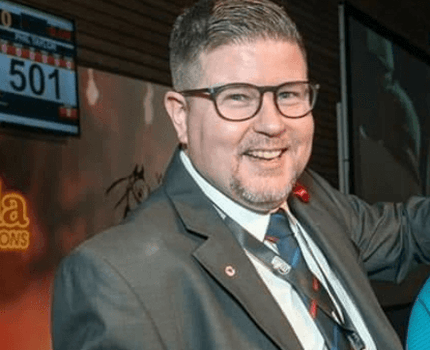
Man smiling at camera

A veteran volunteer at Quotient Sciences 10 years +

I thought it was about time I wrote something about Quotient Sciences and my experience of doing clinical trials. I’m always asked the reasons why I choose to do trials so here are a few of my reasons.  

I volunteer for a number of reasons, firstly after losing my father, mother and brother to cancer plus my only grandson to a heart condition, I can't help but look back and think what if there could have been tablets or medicine out there, developed by pharmaceutical companies? I like the fact that I can leave a legacy that I, Sean from the UK, may have helped so many people’s lives with illnesses and able to live a longer, more enhanced life.

I really do believe there has never been a safer time to volunteer. You are so closely monitored, especially after dosing with the test medicine, as you are put at ease straight away. The slightest adverse event, even a minor headache, is noted by the staff immediately and doctors check you over straight away and you're flagged up to be monitored even more closely.

So how did my volunteering journey begin?

I was appearing on a BBC documentary called Pay Off Your Mortgage in 2 years where the cameras followed my family and I over a 2 year period where we endeavoured to pay off our mortgage in 2 years by doing things other than our current jobs and also ways of saving money.

The then presenter had just written a book of money saving tips and finding ways to make money, one of which was to take part in Clinical Trials - this hit home straight away and I got very excited by the thought.

I was, at the time, working in a bank but already planned to resign and go back to being self-employed. Although we never paid off the mortgage we saved £36,000 which was rather good considering I quit my "safe job" and chose to become self-employed.

What is it like to be a volunteer at Quotient Sciences?

I was recommended to Quotient Sciences by a friend over 10 years ago and now I know so many volunteers that do clinical trials with Quotient Sciences. Some volunteers have been to other clinical research companies previously, but found that Quotient Sciences has a real community feel with the staff being extremely helpful, the doctors and nurses very professional and the facilities better than elsewhere.

I've met and have had some great laughs with so many wonderful staff and volunteers over the years, I am still in touch with volunteers I made friends with all those years ago.

I believe Quotient Sciences goes above and beyond to make our experience as pleasant as it can be and the food alone is a really nice hearty meal selection.

The lounges are comfortable and well equipped, you have everything you need from books, board games, magazines, Sky TV and X-Boxes.

Thanks to the inconvenience allowances I have received from doing clinical trials at Quotient Sciences I've had so many amazing holidays, not least my wife's 40th birthday present with a multi trip to Las Vegas, Hawaii and San Francisco.

I will continue to volunteer with Quotient Sciences, helping to develop medicines for the future. It takes minutes to see if you’re eligible for the healthy volunteer panel and if you want to become a part of the Quotient Sciences community visit: www.weneedyou.co.uk

I never really considered doing clinical trials until I found Quotient Sciences!

Jak, UK

I never really considered doing clinical trials until I found Quotient Sciences!

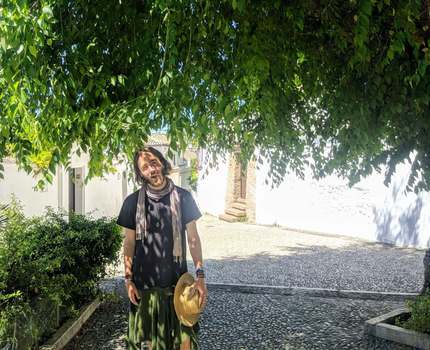
Man standing outside underneath a tree

Doing a clinical trial with Quotient Sciences

Hi! My name is Jak and I never really considered doing clinical trials until I found Quotient Sciences!


Whilst searching the internet and looking at ways of making some income which didn't necessarily require a continuous commitment, I stumbled across clinical trials. I found Quotient Sciences to be relatively nearby and they offered numerous trials of different length, giving me the flexibility to do as I felt, was right for me.

After I applied, I was invited by Quotient Sciences to an induction with the chance to go through how a trial is conducted and to ask any questions I had. They also showed me the facilities in order to give me an idea of where I would be staying if I was to do a medical trial. It was a fairly rainy and bleak day, which they DID NOT put in the invitation! But all the rain was forgiven due to the positivity of the rest of my experience. Once approved to go onto the Quotient Sciences volunteer panel, I was then ready to roam their website in search of a trial that fitted my circumstance, they do also send an email for specific trials you’re eligible for.

I decided to ring to register my interest in a clinical trial and was greeted by a friendly voice on the other end of the phone. We booked a screening appointment, which followed the trend of being a pleasant experience, and later I received a detailed document about the trial I was going to be taking part in. The document gave me all the information I could possibly need and also turned out to be a very interesting bed time reading. Everyone involved in the screening process was lovely and made me smile. The receptionist, the doctors and the nurses happened to all be wonderful too.

Within a week, once all of my results and GP report had been received by Quotient Sciences, I received a phone call informing me that I had passed screening, and I was confirmed for admission to the trial, along with some recommendations of what to bring with me for my time at Quotient Sciences and of course some restrictions that I had to comply with but nothing too tricky.

The inconvenience allowance I received is continuing to give me the opportunity to follow my passions. It has allowed me to travel around the world, meet beautiful people, explore magical places and further my passions in music.

In all honesty, everyone on the trial was lovely and unique in their own way, making the experience diverse and interesting. I spent most days playing pool, bingo, quizzing, playing ping pong or just talking to the other volunteers. I have since recommended my dad to Quotient Sciences and received a payment for recommending him. To date he has completed 3 clinical trials himself and is looking to do more.

I took part in the trial due to the money I would receive, but it would be unfair to suggest that this is the only ‘reward’ you gain. The staff within Quotient Sciences are extremely lovely and they made me feel so welcome and treated me in such a caring way. I will be doing another medical trial in the future knowing I am playing my part in research to help advance the world of medicine for those that need it and make this world a better place - for me, this is the reason I volunteer at Quotient Sciences. I feel like part of the family & I can’t wait to return.

Subscribe to